





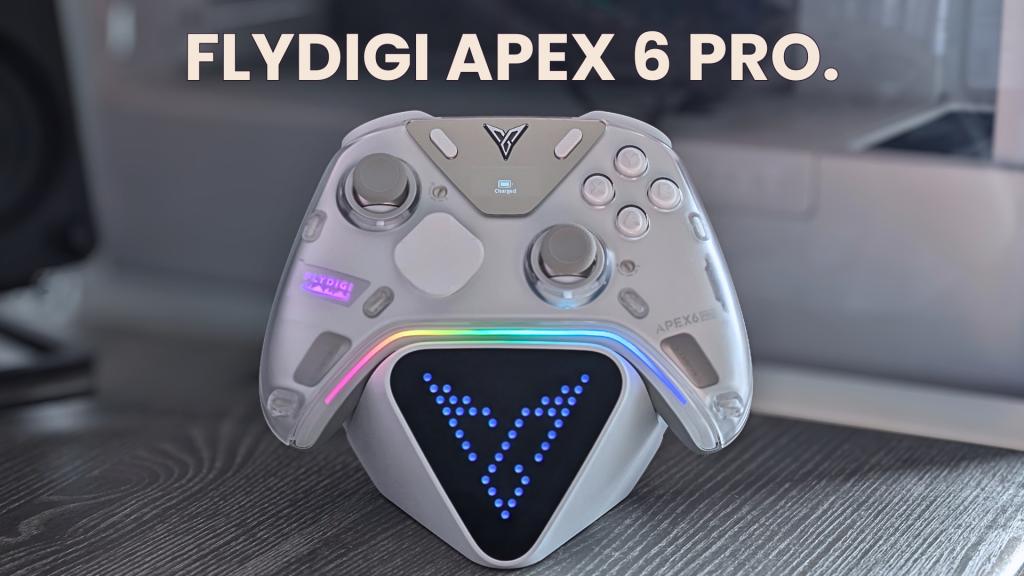
A new number on the box is not a good reason to retire a perfectly good controller. So, with the Flydigi APEX 6 and APEX 6 Pro joining the line-up, the obvious question is: what are you actually getting that the APEX 5 does not already do?
We have had early test units of both new controllers at GameSwap, and both have impressed us. But they make quite different cases for your money. The standard APEX 6 updates the sticks, rethinks the triggers and sharpens up the feel of a familiar design. The APEX 6 Pro gets all of that, then adds the feature that genuinely delighted us: a full four-motor VCM haptic system.
That might sound like another specification to squeeze onto a product page. In your hands, it is much more interesting than that.
There is a small catch, though. Neither new model keeps the APEX 5’s adaptive trigger resistance. This is not a straightforward case of “newer controller does everything the old one did”. There is a real trade-off here if you made use of the games supporting the adaptive trigger tech.
Video Review
Flydigi APEX 5 vs APEX 6: what has actually changed?
The useful thing to know before getting buried in the details is that both APEX 6 models get the new TMR sticks and switchable triggers. You do not have to buy the Pro to get those changes. The big dividing line between the two new models is the haptic hardware.
| Feature | APEX 5 | APEX 6 | APEX 6 Pro |
|---|---|---|---|
| Stick sensors | Hall effect | 12-bit TMR | 12-bit TMR |
| Adjustable stick tension | Yes | Yes | Yes |
| Grip vibration | Asymmetric motors | Asymmetric motors | Voice coil motors |
| Full four-motor VCM system | No | No | Yes: one motor in each grip and each trigger |
| Trigger approach | Adaptive triggers with physical resistance | Switchable full-analogue and microswitch modes | Switchable full-analogue and microswitch modes |
| Headline polling rate | 1,000Hz | 1,000Hz | 1,000Hz |
| Rear controls | Four | Four | Four |
| Screen and swappable faceplate | Yes | Yes | Yes |
| Weight quoted in our video | 335g | 324g | 321g |
Flydigi APEX 6 vs APEX 6 Pro: the haptics are the reason to care
There is a difference between a controller vibrating harder and a controller giving you more interesting feedback. The APEX 6 Pro is firmly in the second camp, though there is something particularly hand-tingling about what the Pro delivers.
It puts a voice coil motor in each grip and each trigger: four VCM motors in total. The standard APEX 6 sticks with the asymmetric grip vibration familiar from the APEX 5. That is the hardware distinction. The more important part is how it comes across when you’re actually playing.
In our testing, different driving surfaces had distinguishable tactile textures. Gear changes came through as short, defined accents rather than disappearing into a general buzz. As the action changed, the feedback could feel as though it was moving around the controller, instead of everything blending into one broad vibration.
That variety is what caught our attention. A road surface and a gear change did not just feel like two excuses for the controller to shake. They had different characters, responding to the nuanced action on screen. There was more texture to the experience, and more separation between the sensations.

This was the part of the comparison that felt properly “next gen” to us. Not because the specification had a bigger number, but because the difference was immediately relevant to the thing we were doing: playing a game.
Let’s not oversell what that means. You may well be aware, that haptics will not sort out your aim or magically improve your racing line. But in an industry hyperfocused on pumping up the hertz and reducing latency by 0.2ms, it’s refreshing to get an immersion upgrade that actually does something different. The appeal is that the game feels more expressive in your hands, not that the numbers are very high so it “must” be better.
If vibration is the first thing you turn off, the Pro is… Probably not worth it. But if you enjoy feeling the road, the impacts and the changes in the action, this is a much more compelling reason to upgrade than a slightly different shell.
The clever bit: audio-reactive feedback without hunting down a game profile
One of the most interesting demonstrations in our video is the Pro running in audio-reactive mode while playing Forza Horizon 6 on Linux. There was no pre-existing game configuration and no Flydigi Space Station running. We were running The APEX 6 through Steam input via the dongle, a simple plug and play setup. We still experienced the varied feedback that made the controller stand out.
That matters because an impressive feature becomes considerably less appealing when enjoying it means first checking a compatibility list, finding the right profile and getting everything lined up. In this particular setup, a dedicated game profile was not the price of admission.
The distinction is worth keeping clear: we were demonstrating audio-reactive feedback, not a bespoke Forza profile. The results describe what we felt in that setup, rather than guaranteeing identical behaviour in every game, on every platform or over every connection. Even with that qualification, it was an encouraging demonstration of how useful the Pro’s haptics can be outside a dedicated configuration.
Adaptive triggers are out. Switchable analogue and microswitch modes are in.
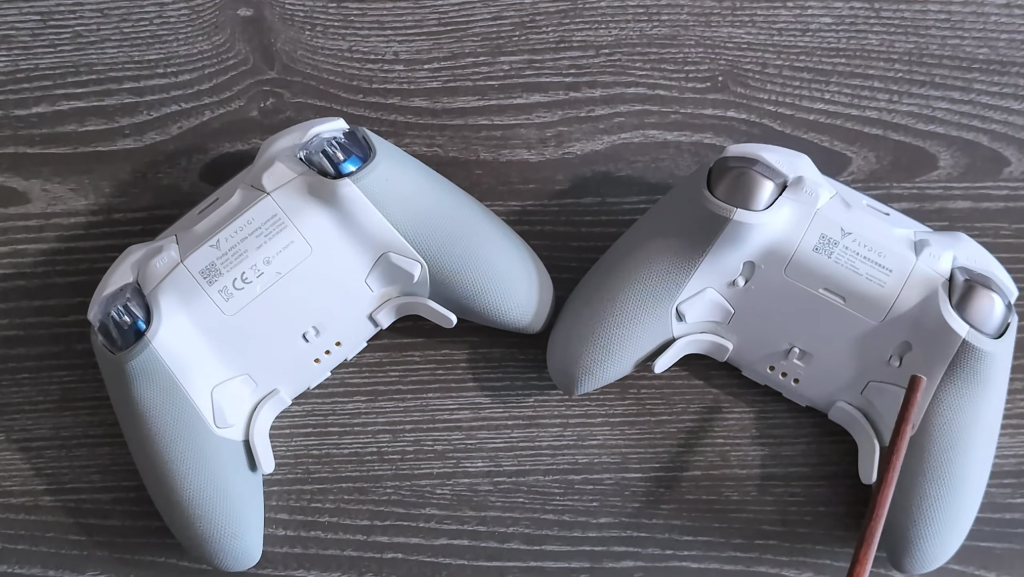
This is the change APEX 5 owners should pay the most attention to, because something is being gained and something is being left behind.
The APEX 5’s adaptive triggers can physically resist your finger. That is different from vibration. Rather than simply sending feedback through the trigger, the mechanism changes how the trigger feels to pull. In supported driving and shooting experiences, that resistance is part of the attraction.
The awkward bit is support, with only around 50 games being supported. The APEX 5 still works normally in other games; you just cannot assume that its adaptive party trick will come along for the ride across your entire library.
Both the APEX 6 and APEX 6 Pro take a different approach. Their triggers switch between a full analogue pull and a short microswitch action.
Full analogue mode is the one for progressive inputs such as acceleration and braking. You want control over how much input you are applying, rather than treating the trigger as a simple on/off button. Feathering the throttle and pressing it all the way down are different jobs.
Microswitch mode goes the other way: a short, decisive press instead of the longer analogue pull. It is the more button-like option, for situations where you care about making an input rather than carefully controlling how far you pull the trigger.
We like the practicality of that. You can change the trigger behaviour to suit the game you are playing, without needing that game to support an adaptive-resistance profile. For someone moving between different genres, it is an easy change to appreciate.
But here is the important bit: the Pro’s trigger haptics do not bring back the APEX 5’s adaptive resistance. Feeling a tactile effect through the trigger and feeling the trigger push back against your finger are not interchangeable. If that resistance is a feature you regularly enjoy on the APEX 5, neither new model is a direct replacement for it.
12-bit TMR sticks, with adjustable tension still on board
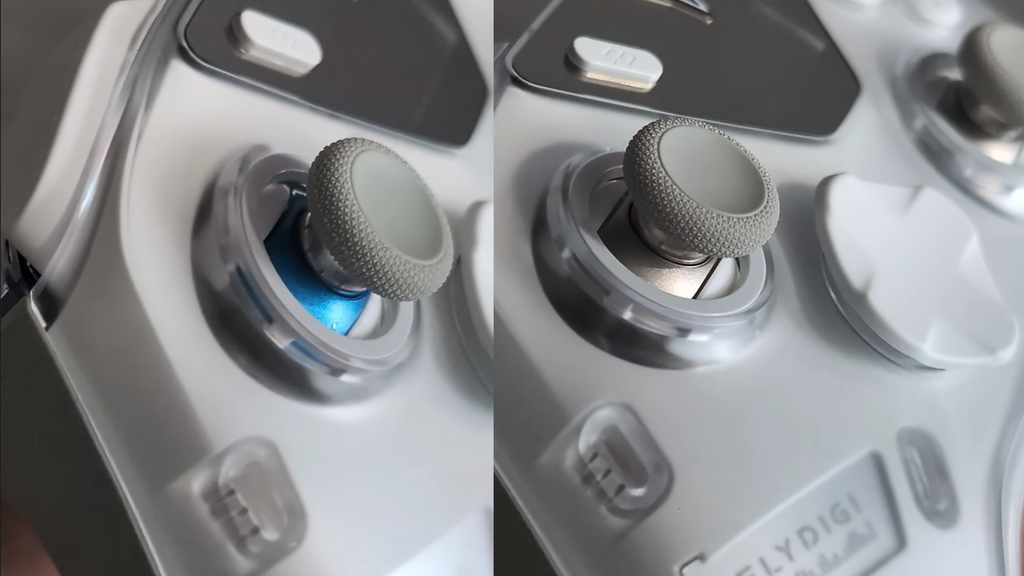
Both new models replace the APEX 5’s Hall effect stick sensors with 12-bit TMR sticks. In our hands-on comparison, the newer sticks felt slightly lighter, responsive and precise. It is a welcome update to one of the parts of a controller you spend the most time interacting with.
Crucially, adjustable stick tension has not gone anywhere. You still get to tune the physical resistance instead of accepting whatever feel came out of the box.
Those are two separate parts of the experience: the sensor technology handles stick-position sensing, while the tension adjustment changes the resistance you feel under your thumb. Moving to TMR does not mean giving up that physical adjustment. Prefer a lighter movement? Like a bit more resistance? That choice remains part of the appeal.
Does this suddenly make the APEX 5’s sticks rubbish? No. We preferred the feel of the newer sticks in our early comparison, but that is a hands-on impression, not proof that a sensor acronym will improve everyone’s aim. For an existing owner, think worthwhile refinement, not an emergency reason to replace a controller you already like.
A little lighter, a different look and noticeably clickier controls

The weights quoted in our comparison are 335g for the APEX 5, 324g for the APEX 6 and 321g for the APEX 6 Pro. That puts the new models 11g and 14g below the APEX 5 respectively.
Interestingly, the Pro is the lightest of the three despite its headline haptic hardware. There is only 3g between the two new models, though, so weight is hardly a persuasive reason to choose one over the other.
These are welcome reductions, not a dramatic transformation. If you are hoping the APEX 6 will feel like a completely different class of controller purely because it weighs less, keep those expectations in check.
The visual changes are easier to spot. The APEX 6 moves away from the transparent detailing and metallic blue accents of the APEX 5. Whether that is an improvement will come down to taste, but it does give the new generation a different look without throwing out the familiar design.
The buttons are more interesting to us than the cosmetics. Both new models feel noticeably clickier, particularly the M3 and M4 rear controls. That adds a more pronounced tactile character to controls you are actually using, rather than giving you another change that only matters in product photos.
Put it together and the new controllers feel like revisions of a familiar APEX design: slightly less weight, a changed appearance and sharper-feeling button presses. No need to pretend they are a completely different species.

What stays the same?
Quite a lot of the good stuff that makes the APEX a solid series. Adjustable stick tension, four rear controls, an onboard screen and a swappable faceplate all remain. You are not giving up those familiar, most crucial APEX features to get the new sticks and triggers.
The headline polling rate also stays at 1,000Hz across this comparison, with the usual need to distinguish headline specifications from what applies to a particular connection mode. There is no bigger-Hz-number contest to settle here.
That continuity helps explain the standard APEX 6. It is not trying to make the APEX 5 look ancient. It keeps much of the same appeal and changes several things you touch and use. The Pro is the one that adds a substantially different feedback experience on top.
Should APEX 5 owners upgrade?
Start with the features you actually use, not the number on the box. There is no prize for replacing a controller that already does everything you need.
| Your priority | Our take |
|---|---|
| You regularly use adaptive trigger resistance in supported games. | Keep the APEX 5 in serious consideration. Neither new model directly preserves that experience, including the Pro. |
| You want TMR sticks, switchable analogue/microswitch triggers and clickier controls. | The standard APEX 6 gets you those changes. You do not need the Pro for the core control updates. |
| You want the biggest change in immersion. | The APEX 6 Pro makes the strongest upgrade case. Its four-motor VCM haptics were the standout difference in our testing. |
| You usually turn vibration off. | Focus on the standard APEX 6’s changes—or stick with your APEX 5. The Pro’s main attraction is unlikely to do much for you if you disable it. |
For a happy APEX 5 owner, we would not call the standard APEX 6 a must-buy. The new trigger options, sticks and button feel are useful, but whether they justify replacing your current controller is another question. You need to want those particular changes.
If you’re new to the APEX series, unless you really must have adaptive triggers, it’s going to make more sense to stick with the latest gen here.
The Pro has a more convincing answer to “what will actually feel different when I play?” Its haptics were the feature that surprised us, and the clearest reason to move to this generation when immersion is the goal.
Buying your first APEX rather than replacing one? The decision is simpler: the standard model gives you the new generation’s control updates, while the Pro adds the richer haptic experience. Choose based on whether you will enjoy that feedback, rather than assuming the word “Pro” automatically makes it the right purchase.
Does an APEX Pro raise questions about Vader?
There is another angle we did not cover in the video: if APEX now has standard and Pro models, where might that leave the Vader series?
Our educated guess is that APEX could eventually become Flydigi’s main PC controller family, with the standard model covering the core experience and the Pro offering the more immersion-focused option. It is an easy structure for buyers to understand: pick the underlying controller, then decide how much the extra haptic hardware matters to you.
That could give Flydigi a reason to make Vader’s role more distinct, rather than leaving the two families with overlapping appeal. The interesting question is not simply which name survives, but what each range would offer that the other does not.
Before anyone turns that into a “Vader is dead” headline: this is speculation, not a confirmed product strategy. An APEX 6 Pro does not establish that Vader is being replaced, discontinued or repositioned. Flydigi could just as easily continue developing both families, with two versions of this APEX generation sitting alongside the Vader range.
APEX 6 Pro UK availability at GameSwap
At the time of writing, the APEX 6 Pro is available to pre-order from GameSwap, with stock estimated for October 2026. The standard APEX 6 is expected to follow a little later, as outlined in our video. Check the product listing for the latest stock estimate before ordering.
There is also the APEX 6 Pro Phantom Blade Zero Limited Edition, which is available to pre-order. Alongside the special design, it includes a charging dock and carry case. That makes it worth comparing as a complete package, especially if those are accessories you would be looking to buy anyway. It is not just a different look.
Buying through GameSwap means dealing with a brand-authorised UK retailer, with local customer support, tax-inclusive UK pricing and no hidden customs fees on UK orders.
And the boring-but-important delivery detail: next-day UK delivery applies to eligible in-stock orders. Pre-orders dispatch after stock arrives, in line with the latest delivery estimate and depending on the service you select at checkout. A pre-order is not an in-stock order, so keep an eye on the listing.
Our verdict: a sensible refresh, with a much more exciting Pro
The APEX 6 makes useful changes to an already capable controller. We like the updated sticks, the choice of trigger modes and the more tactile controls. But an APEX 5 does not suddenly become a bad controller because its successor has arrived—and its adaptive resistance still gives some owners a good reason to stay put.
The APEX 6 Pro is the one that makes this generation more interesting. Its four-motor haptics brought a variety and texture to the feedback that stood out in our testing. For players who enjoy that extra layer of immersion, this is the upgrade we would pay closest attention to.
Not because “Pro” is printed on the box. Because you can feel what it adds.
Sources
- GameSwap’s hands-on APEX 6 and APEX 6 Pro comparison with the APEX 5 — our primary reference for testing impressions, weight figures, the Linux demonstration and the upgrade assessment.
- Flydigi’s official APEX 5 specifications and adaptive-trigger overview — supplementary reference for the APEX 5 hardware and trigger features.
- GameSwap’s APEX 6 Pro product listing — specifications and the latest UK pre-order information.
- GameSwap’s APEX 6 Pro Phantom Blade Zero Limited Edition listing — limited-edition details, included dock and carry case, and pre-order information.
 English
 German
 Italian