






If 2025 felt like the year retro handhelds became properly mainstream, 2026 already looks like the year the category starts to mature, with the main players scrapping for the dominant market share with quirky designs and nostalgic callbacks.
We are seeing a sharper split between compact Linux-first machines, premium Android powerhouses, affordable dual-screen experiments, and increasingly specialised formats built around 4:3 displays, vertical layouts, or genuinely pocketable designs. For anyone tracking upcoming retro handhelds, that makes the second half of 2026 especially interesting.
The bigger story is that this no longer feels like a one-brand race. Retroid is pushing hard with the Pocket Nova and appear to be hinting at a dual-screen addition of their own, but Anbernic and TrimUI deserve equal billing going into Q3 and Q4 as two solid brands in this space. Anbernic has the unusual RG 55G1 on the way, which looks a bit like the Retroid Pocket 4, and at the time of writing this article, the full specs are yet to be confirmed. TrimUI, a brand previously focused solely on budget devices, is splitting its Brick line into both affordable Linux and more ambitious Android hardware.
That gives 2026 a healthier spread than usual: not just more powerful handhelds, but more purposeful ones. Below are the devices and launches we are watching most closely, with particular attention paid to models that could shape buyer expectations through the rest of the year.
Contents
The big theme for 2026: purpose-built handhelds
For a while, many retro handheld launches were about spec-sheet one-upmanship. In 2026, the more exciting story is product intent. Manufacturers are building around a very specific experience: a true 4:3 display for classic console libraries, a dual-screen form factor for DS play, a vertical chassis with enough power to go beyond 16-bit nostalgia, or a smaller horizontal device that still feels properly premium.
In part, this could be due to supply constraints pushing suppliers towards more innovative and unconventional ideas, like we saw with the snaptcaular Anbernic RG Rotate.
That matters because retro players are increasingly selective. The existing market already have at least one handheld, and tapping into a new segment means pulling out a wildcard every now and then to get publicity.
Retro handheld enthusiasts do not just want “more power”; they want the right screen geometry, the right ergonomics, the right software layer, and enough overhead to make shaders, higher internal resolutions, and platform-specific workflows feel effortless. The best upcoming retro handhelds in 2026 are the ones that understand the brief from their existing base, but aren’t afraid to try bold new ideas.
Anbernic RG 55G1: the second-half Anbernic wildcard

Anbernic has formally teased the RG55G1 as a new horizontal handheld with a cleaner full-screen look, 2.5D glass, double-shot buttons, 3D Hall-effect joysticks, and Hall-effect triggers. Even before every specification is locked down, the direction is clear: this is Anbernic releasing a practical device more in line with other premium brands, with a more polished Android-style handheld rather than simply iterating another familiar shell.
The interesting part is the positioning. Early coverage has focused on the “new core” language and the possibility of a Qualcomm-powered Anbernic. Until the full specification sheet is public, it is worth avoiding overconfident claims about chipset, price, or exact release timing. But as a second-half 2026 watchlist entry, the RG 55G1 absolutely deserves a headline slot.
For buyers, the appeal is obvious. Anbernic has long been strong on value, format variety, and fast iteration. If the RG 55G1 combines that with stronger software, better controls, and a more refined horizontal design, it could become one of the key alternatives to Retroid’s Android range rather than just another Anbernic release in a crowded catalogue.
TrimUI Brick Pro: the affordable Q3 Linux handheld to watch

The TrimUI Brick and Brick Hammer design remains one of the most iconic and pocketable to date. Rather than chasing flagship Android performance, the Brick Pro looks like a deliberately affordable Linux-first handheld: compact, stylish, and aimed at players who want fast access to classic libraries without turning setup into a hobby.
The confirmed specification tells that story clearly. The Brick Pro uses an Allwinner A133P processor with 1GB RAM and 8GB storage, paired with a 3.95-inch 1024×768 IPS display, dual Hall-effect joysticks, RGB lighting, a 5000mAh battery, and Type-C video output.
It is not designed to threaten the Retroid Pocket Nova on raw power. Instead, it gives budget buyers a larger, sharper Brick-style device with joysticks – something many users will be pleased about given the regular TrimUI Brick does not have them.
Not every customer needs a high-end Android machine for GameCube, PS2, or 3DS. Plenty of buyers want a smart-looking handheld for 8-bit, 16-bit, arcade, GBA, PS1, and lightweight pick-up-and-play sessions. If TrimUI keeps the firmware clean and the build quality strong, the Brick Pro could be one of the more approachable Q3 releases.
TrimUI Brick Hammer Pro U: TrimUI’s premium Android step-up

The more ambitious TrimUI launch is the TrimUI Brick Hammer Pro U. This is the device that stops TrimUI being discussed only as a budget Linux brand. It keeps the vertical Brick/Hammer identity, but moves upmarket with Android, a stronger Snapdragon platform, more memory, more storage, and a premium metal-focused build.
Current listings and launch coverage point to a Snapdragon G2 Gen 1, Adreno A21 GPU, 6GB RAM, 128GB storage, Android 15, a 3.95-inch 1024×768 IPS display, dual Hall-effect joysticks, 5000mAh battery, USB-C 3.0, and DP-alt video output up to 1080p at 60Hz. In plain English, this is TrimUI trying to make a vertical handheld that can go well beyond the usual “cheap Brick” expectations.
The only caveat is pricing and availability. Retail information has shifted, and pricing appears to vary significantly by store and configuration. For now, the safer editorial position is to present the Brick Hammer Pro U as a premium TrimUI Android device with late-July shipping indications, rather than locking the article to one UK price until retailer supply is finalised.
Retroid Pocket Nova: still one of the biggest Android launches of the summer
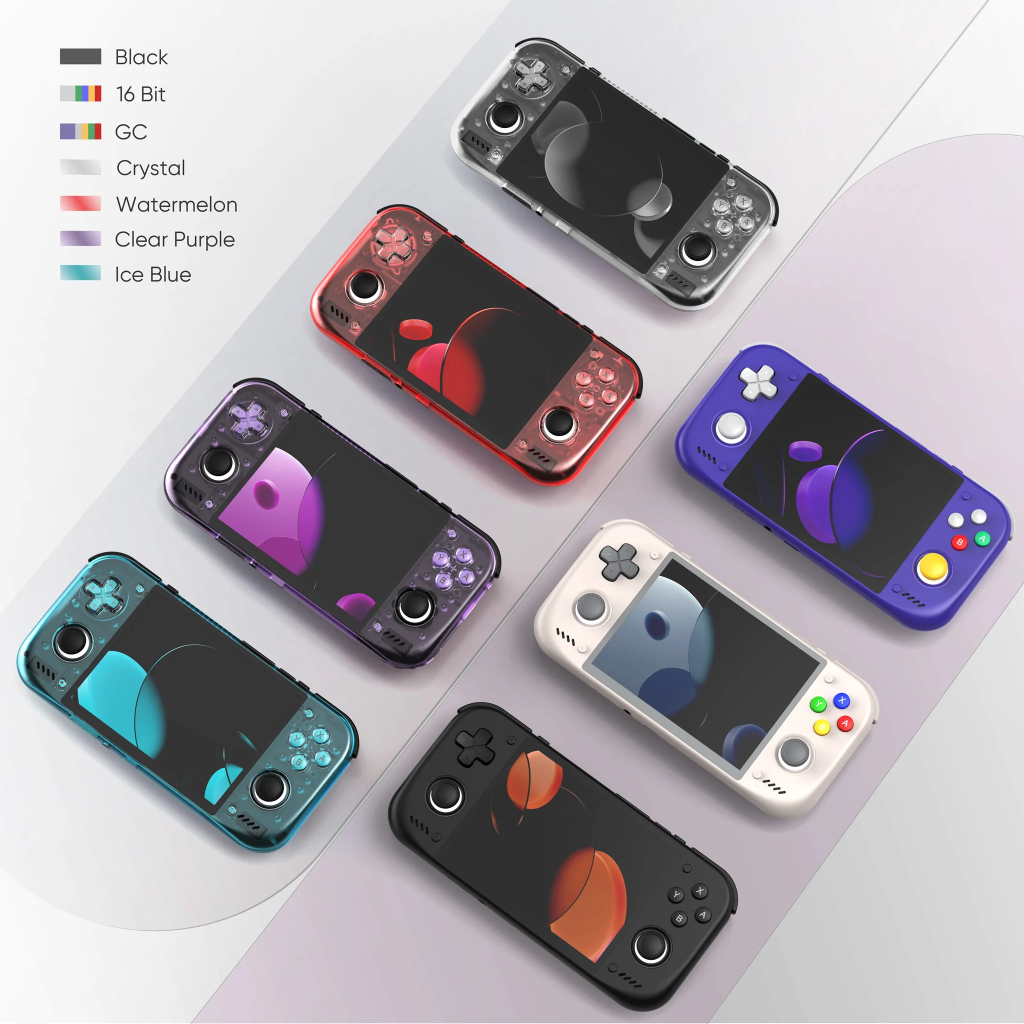
The Retroid Pocket Nova still deserves a major place in the article. It remains one of the most compelling Android handhelds announced for summer 2026, especially for buyers who want a proper retro-first screen without sacrificing modern performance.
The headline is the combination of a QCS8550 platform, 8GB or 12GB LPDDR5x RAM, 128GB UFS 3.1 storage, Android 13, active cooling, and a 4.5-inch 120Hz AMOLED display in a 4:3-friendly 960p format. That puts the Nova in a very strong position for Dreamcast, Saturn, PSP with scaling flexibility, and more demanding GameCube and PS2 workloads, while still being unusually well aligned to classic content.
What makes the Nova compelling is not simply the performance ceiling. It is the balance. A compact 4:3 OLED panel with this class of chipset has the potential to become a reference point for enthusiasts who want one Android device that feels unapologetically retro-first, rather than a widescreen handheld being repurposed for older libraries.
For UK buyers, this is exactly the sort of device where retailer support matters. Higher-end Android handhelds reward confident setup, accessory matching, and proper after-sales help. Buying through GameSwap means next-day UK delivery, local customer support, and tax-inclusive pricing without surprise customs charges landing after checkout.
Retroid dual-screen / Flip 3: fascinating, but still a rumour
Tt the time of writing, there does not appear to be a fully announced final product under a confirmed Retroid DS or Pocket Flip 3 name. The current excitement comes from reporting around a social reply that suggested “second half of the year” progress on a dual-screen Retroid device.
That is still enough to make it one of the most interesting stories to follow. Retroid already sells a dual-screen add-on, and a dedicated dual-screen or clamshell system would be a logical next step. If it happens, the appeal is obvious: DS and 3DS emulation are significantly better when the hardware respects the original two-screen layout.
However, Anbernic’s RG DS means Retroid no longer owns the dual-screen conversation by default. Retroid may be able to bring more performance, a slicker Android experience, or stronger mainstream appeal, but Anbernic already has the affordable dual-screen lane occupied. That makes the possible Retroid device more exciting, not less, because it gives the second half of 2026 a proper dual-screen rivalry.
Also worth watching: AYANEO and AYN
AYANEO’s Pocket MICRO 2 and Pocket S Mini remain relevant for buyers who want boutique materials, premium software, and compact Android performance. However, due to sporadic changes in supply and unclear messaging, we aren’t entirely confident featuring this is a “big” release until more information is confirmed on the supply. As we write this article, were seeing news of a new KONKR drop inbound, but there are no details as of yet…

As for AYN, they continue to matter wherever high-end Android emulation and dual-screen hardware are discussed.
What makes a 2026 handheld worth waiting for?
The answer is increasingly specific. In 2026, the most exciting retro handhelds tend to do at least one of the following exceptionally well:
- Deliver the right display format for retro content, especially 4:3, square, or dual-screen layouts
- Pair good controls with enough chipset overhead for shaders, upscaling, and smoother frontend navigation;
- Offer a form factor that fits real-life use, whether that means pocketability, vertical nostalgia, or long-session comfort;
- Ship with software that reduces tinkering friction rather than creating more of it
- Give buyers a clear reason to choose it over the many similar-looking devices already available.
That is why the Anbernic RG 55G1, TrimUI Brick Pro, TrimUI Brick Hammer Pro U, Retroid Pocket Nova, and the rumoured Retroid dual-screen device all stand out for different reasons. They are not chasing the same buyer, and that is healthy for the category.
Our updated 2026 watchlist
- Anbernic RG 55G1 – Anbernic’s most interesting second-half wildcard, with a modern horizontal design, 2.5D glass, Hall controls, and “new core” positioning.
- TrimUI Brick Pro – the accessible Linux-first Q3 option for buyers who want a compact, affordable, retro-focused handheld.
- TrimUI Brick Hammer Pro U – TrimUI’s premium Android step-up, with Snapdragon power, more memory, video output, and a higher-end vertical build.
- Retroid Pocket Nova – still one of the standout 4:3 OLED Android handhelds of the summer.
- Retroid dual-screen / Pocket Flip 3 rumour – still unofficial, but potentially one of the most important stories of the second half of 2026 if Retroid confirms dedicated dual-screen hardware.
- AYANEO Pocket MICRO 2 – premium alternative for buyers who want boutique hardware and AYANEO’s software ecosystem.
Final thoughts
So, what retro handhelds are we looking forward to in 2026? The answer is no longer just “whatever Retroid does next.” Retroid still has one of the year’s most exciting Android launches in the Pocket Nova, and its rumoured dual-screen direction is absolutely worth watching. But Anbernic and TrimUI now deserve to stand beside it.
Anbernic brings the clearest second-half wildcard with the RG 55G1 and already has a practical dual-screen option in the RG DS. TrimUI, meanwhile, has created one of the most interesting budget-versus-premium splits in the category with the Brick Pro and Brick Hammer Pro U. Add Retroid’s 4:3 OLED push and the wider dual-screen race, and the rest of 2026 looks unusually strong.
For UK buyers, the smartest move is often to wait not just for the right hardware, but for the right retail experience. The best retro handhelds are more enjoyable when they arrive quickly, include taxes upfront, and come backed by local support that actually understands the category. That is exactly where GameSwap adds value as a brand-authorised retailer, with next-day UK delivery, responsive customer service, and zero hidden customs surprises.
And if 2026 keeps moving at its current pace, this list may look even more exciting by autumn.
Sources
- ANBERNIC official first look for the RG 55G1, covering its horizontal design, 2.5D glass, double-shot buttons, 3D Hall-effect joysticks, and Hall-effect triggers
- Retro Handhelds coverage of the Anbernic RG 55G1 teaser and early speculation around its new naming scheme and processor direction
- Retro Handhelds follow-up on RG 55G1 benchmark leaks and still-unconfirmed specifications
- ANBERNIC official RG DS product page, covering dual 4-inch touch screens, Android 14/Linux support, RK3568 hardware, stylus support, and pricing
- Steam Deck HQ report on Anbernic’s official Linux firmware option for the RG DS
- Retro Handhelds coverage of the RG DS Linux update and dual-screen software improvements
- TrimUI official Brick Pro product listing covering price, colour options, Allwinner A133P hardware, 3.95-inch display, and 1GB/8GB configuration
- Notebookcheck report on TrimUI Brick Pro and Brick Hammer Pro U pricing and availability differences across stores
- Retroid official Pocket Nova product page covering QCS8550, 8GB/12GB RAM, 4.5-inch 120Hz AMOLED display, active cooling, Wi‑Fi 7, and end-of-July shipment timing
- Retro Handhelds coverage detailing Retroid Pocket Nova specifications, pricing, colours, and pre-order timing
- Retro Handhelds report discussing the rumoured Retroid dual-screen / Pocket Flip 3 direction and second-half 2026 social media comment
- Retro Dodo report on Retroid’s rumoured second-half 2026 dual-screen handheld
- AYANEO official Pocket MICRO 2 release article
- AYANEO official Pocket S Mini article covering its 4:3 display, Snapdragon G3x Gen 2 platform, metal frame, Hall controls, and early-bird pricing
 English
 German
 Italian